Radon Testing
Radon-Testing
Inspect-More provides professional radon testing services for homeowners, buyers, sellers, and real estate professionals throughout Johns Creek and the Metro Atlanta area. Radon is a colorless, odorless radioactive gas that can accumulate inside homes and poses a serious long-term health risk if elevated levels are present.
Radon testing is performed in accordance with Environmental Protection Agency (EPA) recommended protocols using industry-accepted testing methods. Results are clearly reported and explained so clients can understand the measured radon level and any recommended actions.
Examples of other conditions commonly observed during home inspections can be found in our inspection photo galleries.
Understanding Radon Test Results
- At or below 2.0 pCi/L: Low level
- Between 2.0 and 4.0 pCi/L: Elevated; mitigation may be considered
- At or above 4.0 pCi/L: Action recommended per EPA guidance
Because radon levels can fluctuate due to weather conditions, seasonal changes, and home use, the EPA recommends retesting at least every two years and after significant structural or mechanical changes to the home.
Radon testing may be scheduled in conjunction with a home inspection or as a standalone service, depending on your needs.
Radon Testing FAQs
Do you offer radon testing in Johns Creek and Metro Atlanta?
Yes. Inspect-More provides professional radon testing services in Johns Creek and throughout the Metro Atlanta area. Radon testing may be scheduled as a standalone service or added to a home inspection.
What is radon, and why does it matter?
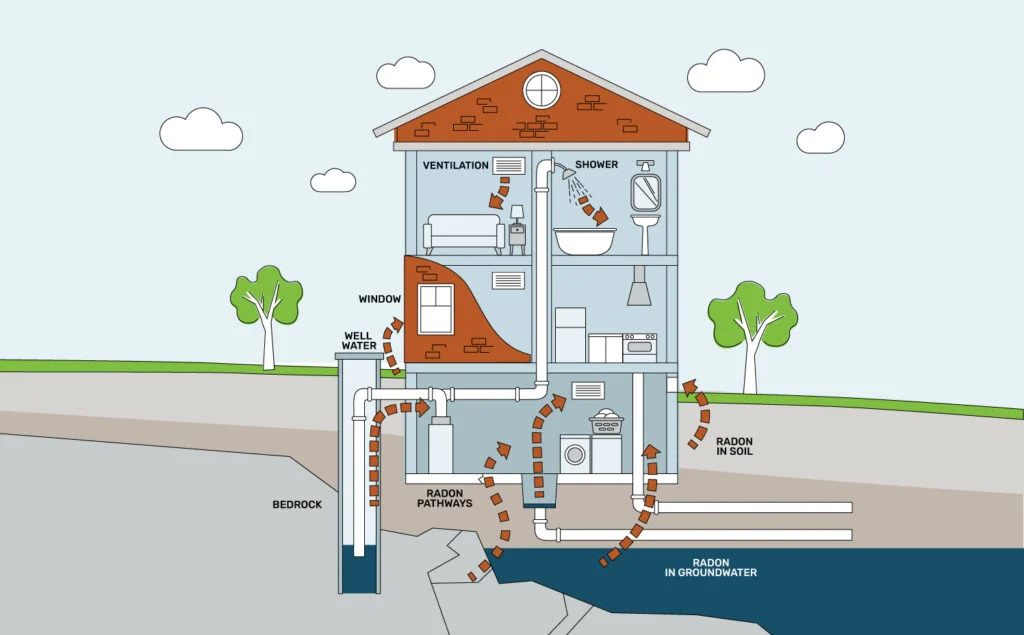
Radon is a naturally occurring radioactive gas that can enter homes through the soil. It is colorless and odorless, and long-term exposure to elevated radon levels is a known health concern. Testing is the only way to determine a home’s radon level.
What radon level is considered high?
The Environmental Protection Agency (EPA) recommends taking action when radon levels are 4.0 picocuries per liter (pCi/L) or higher. The EPA also notes that levels between 2.0 and 4.0 pCi/L may warrant consideration of mitigation.
How is radon testing performed?
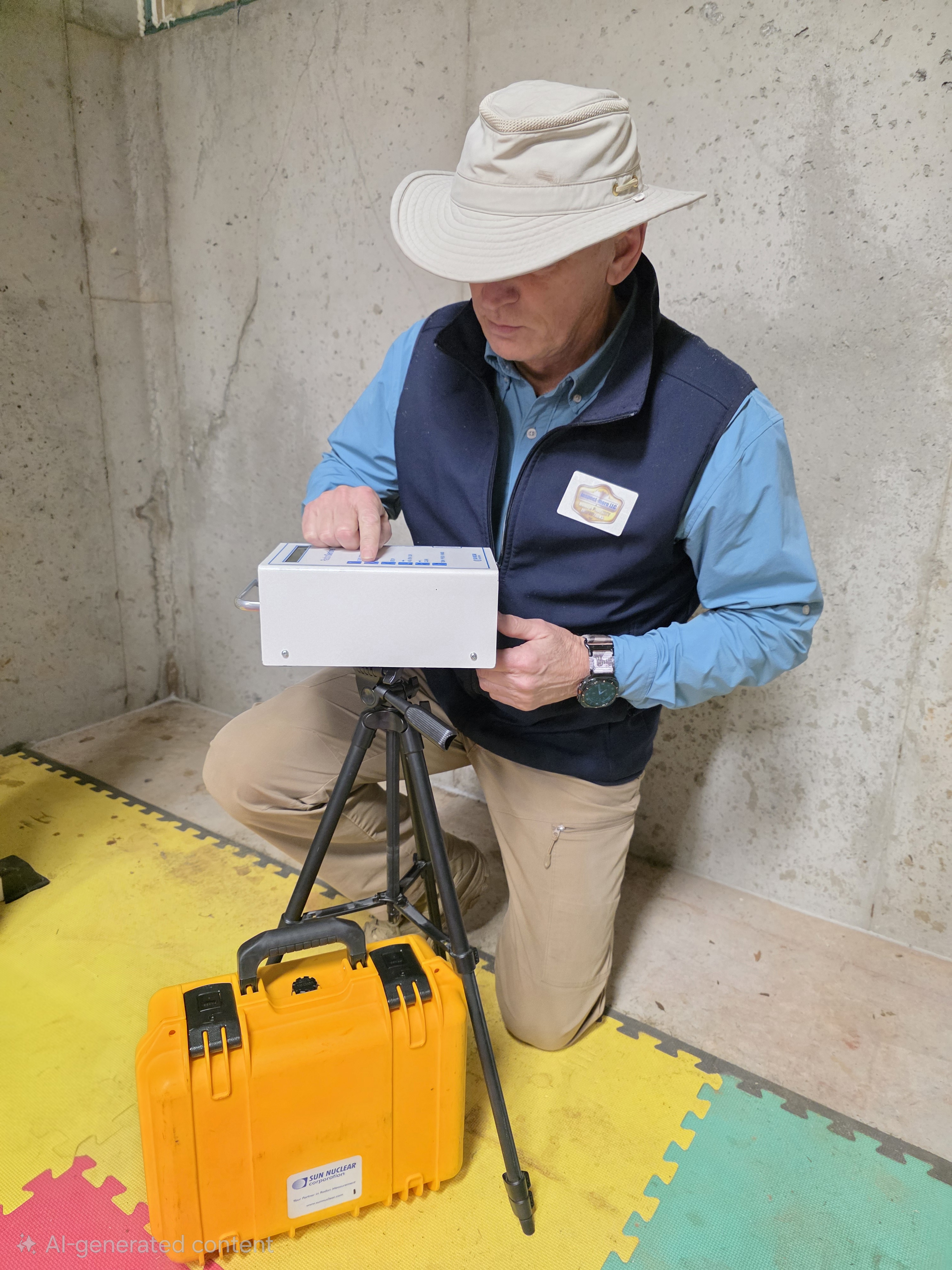
Radon testing is conducted using industry-accepted testing methods and EPA-recommended protocols. The test measures radon levels under the conditions present during the testing period and provides a clear, documented result.
How long does a radon test take?
Most residential radon tests are conducted over a defined testing period in accordance with standard protocols. Specific timing and setup requirements will be explained at the time of scheduling so you know what to expect.
Do radon levels change over time?
Yes. Radon levels can fluctuate due to weather conditions, seasonal changes, ventilation patterns, and other environmental factors. A radon test represents a snapshot of conditions during the testing period.
How often should radon be retested?
The EPA recommends retesting at least every two years and after significant changes to the home, such as renovations, foundation work, or HVAC and ventilation modifications. Homes with radon mitigation systems should also be periodically retested to confirm continued performance.
If radon levels are elevated, what are the next steps?
If elevated radon levels are reported, a qualified radon mitigation professional can evaluate the home and recommend corrective measures. Inspect-More provides clear results and EPA-based guidance to help you understand available options.