Home Inspection Warranties: What the Fine Print Actually Says
Buying a home is stressful enough without having to decode warranty fine print. Home inspection warranties are often presented as added protection. However, many buyers only discover their limitations after a claim gets denied.
As a result, homeowners can be surprised to learn that exclusions, timing restrictions, payout caps, and coverage gaps may leave them responsible for repairs they assumed would be covered.
This article breaks down what home inspection warranties actually cover, why many claims fail, and what buyers should focus on instead. More importantly, it explains why a thorough inspection and clear reporting provide far more value than marketing promises alone.
1. The Reality of Home Inspection Warranties
Home inspection warranties are often marketed as a safety net:
“If something breaks after the inspection, we’ll take care of it.”
At first glance, that sounds reassuring. However, the actual contracts often contain significant exclusions, limitations, deductibles, claim deadlines, and coverage conditions.
Consequently, successful claims can be far more difficult than buyers expect.
Common Reasons Home Inspection Warranty Claims Get Denied
- Pre-existing conditions: If the issue existed before the inspection, coverage may be denied.
- Coverage caps: Structural or system repairs often exceed warranty payout limits.
- Standards of Practice exclusions: Many items outside the inspection scope are automatically excluded.
- Maintenance requirements: Homeowners may need to prove proper maintenance records.
- Visible defects: Some warranties only apply to hidden failures, not visible concerns.
In other words, many warranties only apply under narrow circumstances.
2. Why Home Inspection Warranty Coverage May Be Narrower Than Expected
A. Contract Limitations Can Affect Claim Approval
In many cases, homeowners discover that warranty coverage is narrower than they assumed. Claim eligibility often depends on exclusions, maintenance documentation, timing requirements, and contract language that many buyers never fully review before closing. As a result, buyers can become frustrated when issues they believed were covered fall outside the warranty terms. Meanwhile, homeowners often lack the technical knowledge to challenge coverage decisions effectively.
Like most service contracts, warranty agreements include specific limitations and conditions that buyers should review carefully before relying on them.
B. Coverage Is Usually Narrower Than Buyers Expect
Many buyers assume the warranty functions like broad insurance coverage. However, the actual protections are often much more limited.
For instance, warranties commonly exclude:
- Water intrusion and moisture damage
- Anything visible during the inspection
- Issues documented in the inspection report
- Cosmetic concerns
- Wear and tear
- Items outside the Standards of Practice
- Improper installation discovered later
As a result, buyers sometimes discover that the only covered issues are hidden, unknown, not visible, not documented, and not considered pre-existing.
Very few real-world problems satisfy all those conditions at the same time.
3. What Buyers Need Instead of Home Inspection Warranties
A warranty may sound comforting. However, a quality inspection provides something far more valuable:
- Clear documentation of visible defects
- Construction-informed evaluation of systems and components
- High-resolution photos and explanations
- Realistic guidance about priorities and maintenance
- Information buyers can actually use during negotiations
- A long-term owner’s manual for the home
Most importantly, a thorough inspection helps buyers make informed decisions before closing, not after a problem appears.
What a Good Inspection Does Better Than a Warranty
- Identifies concerns early
- Helps buyers negotiate repairs or credits
- Provides maintenance guidance
- Explains shutoffs, filters, and utility systems
- Documents attic, roof, crawlspace, drainage, and structural conditions
- Helps reduce uncertainty and stress
In other words, inspections are about risk management and education, not simply claim eligibility later.
4. What Experienced Real Estate Agents Already Know
Experienced agents have seen these situations many times. Consequently, strong agents understand that the goal is reducing surprises before closing, not relying on warranty fine print afterward.
That’s why many experienced agents prioritize:
- Clear reporting
- Thorough documentation
- Honest communication
- Practical repair guidance
- Construction-informed inspections
5. New Construction Is Not Automatically Problem-Free
One of the biggest misconceptions buyers have is assuming that a brand-new home shouldn’t need an inspection.
“It already passed code inspections, so everything should be fine.”
However, new construction still involves multiple subcontractors, compressed timelines, changing crews, weather delays, and simple human oversight.
As a result, even newly built homes can contain:
- Missing insulation
- HVAC duct defects
- Improper drainage grading
- Roof flashing issues
- Electrical deficiencies
- Incomplete installations
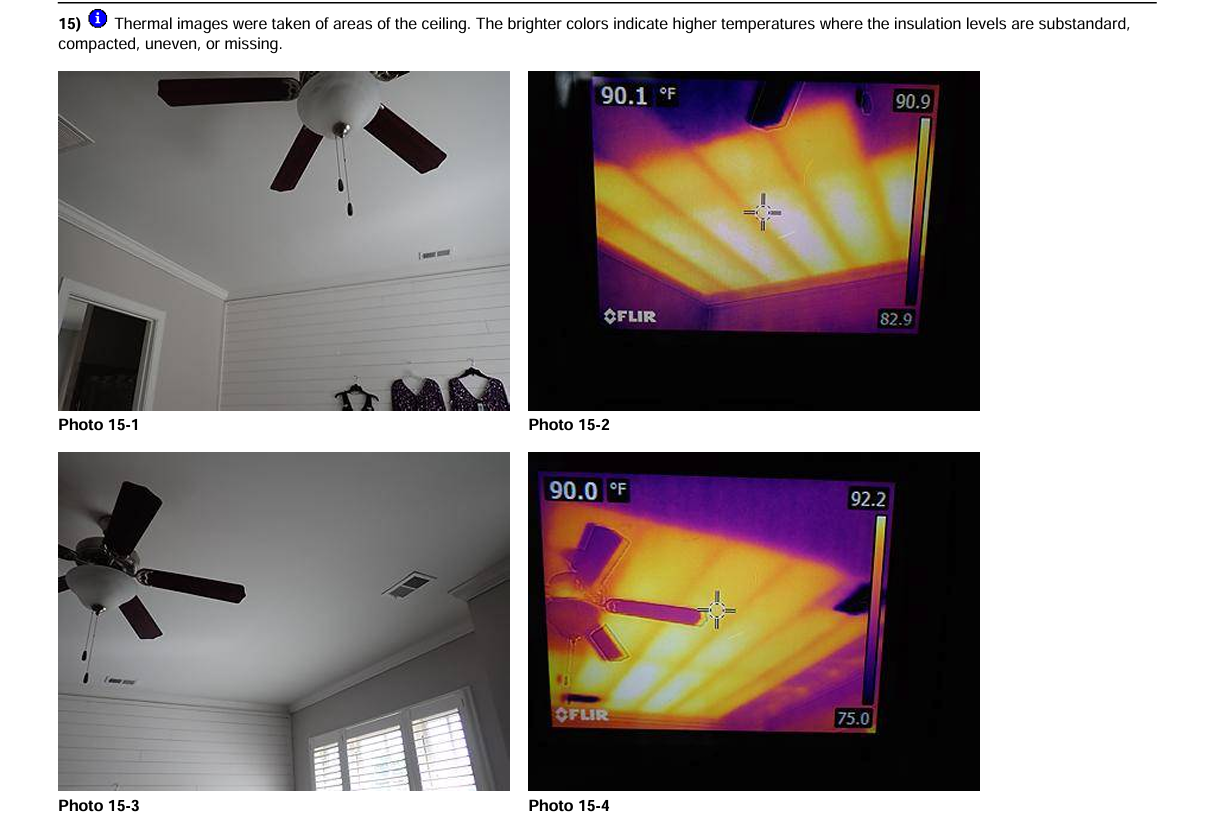
Thermal imaging revealed missing or uneven attic insulation in multiple ceiling areas during a new construction inspection.
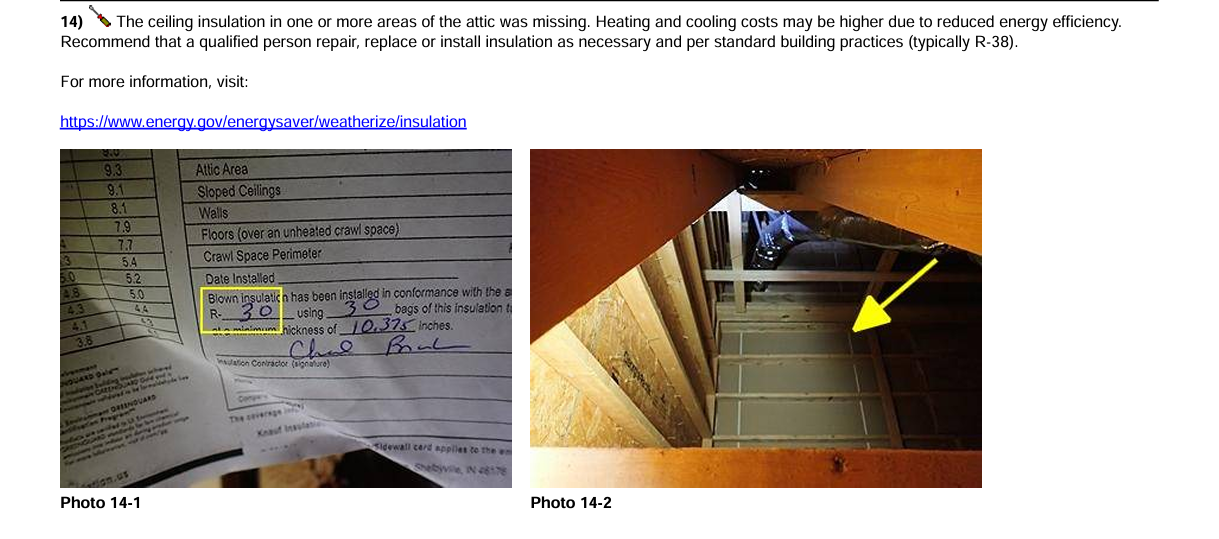
This newly constructed home had already received builder signoff, municipal inspections, and energy-code documentation. However, large sections of attic insulation were still missing at the time of inspection.
Again, this is not about creating alarm. Instead, it’s about helping buyers understand what they’re purchasing.
6. My Approach to Home Inspections
At Inspect-More LLC, I focus on providing:
- Construction-informed inspections
- Clear explanations in plain language
- Detailed photo documentation
- Thermal imaging when appropriate
- Honest reporting without unnecessary alarmism
- Practical guidance buyers can actually use
I don’t believe buyers need gimmicks or unrealistic promises. Instead, I believe buyers benefit most from clarity, documentation, and realistic expectations.
That’s why my reports are designed to function as both:
- A negotiation tool before closing
- A homeowner reference guide after move-in
Final Thoughts on Home Inspection Warranties
A home inspection warranty may sound reassuring in marketing materials. However, buyers should understand that many warranties come with important limitations, exclusions, and claim restrictions.
Ultimately, the best protection is not fine print. It is a thorough inspection, clear reporting, and informed decision-making before closing.
For general inspection scope guidance, you can also review the ASHI Standards of Practice, which explains what a professional home inspection is designed to cover.
If you’d like a detailed, construction-informed inspection with clear explanations and photo documentation, visit my Home Inspection Services page or Schedule Your Inspection Online.