Radon Testing Before Closing in North Metro Atlanta: Is It Worth It?
Realtor + Inspector Q&A (North Metro Atlanta)
Buyers and agents ask a fair question in North Metro Atlanta:
“If radon is a concern, should I test before closing?”
Around here, “North Metro Atlanta” often means Johns Creek, Alpharetta, Suwanee, Cumming, and Buford—plus nearby communities. Radon can’t be seen or smelled during a standard visual home inspection. Even a home that looks perfect can still test above recommended levels.
A 48-hour radon test during due diligence gives you a clear, documented result before closing. With real data in hand, buyers, sellers, and agents can make decisions without guessing.
Quick takeaways
- Radon can show up in new or older homes (slab, crawlspace, or basement).
- A neighbor’s result does not predict your home’s result.
- Testing during due diligence keeps options open if results come back elevated.
- Mitigation is common and usually manageable.
- A post-mitigation test confirms the system is performing as intended.
Video: Radon testing before closing in North Metro Atlanta
Realtor + Inspector Q&A
Realtor: “Do we really need a radon test before closing?”
Inspector: If you want fewer surprises, testing helps. Radon is invisible, and the only way to know a home’s level is to test that specific home.
Realtor: “Does a newer home or well-maintained home reduce the risk?”
Inspector: Not reliably. Soil gas and pressure differences drive radon, so newer homes can still test elevated.
Realtor: “If the test is elevated, is it a deal breaker?”
Inspector: Usually not. Mitigation is common, and a post-mitigation test verifies the system is working as intended.
Why test before closing
Testing before closing is about timing and leverage. When you test during due diligence, you can address elevated results while the contract is still active.
Benefits during the inspection period
- Clear data based on measured results
- Time to negotiate solutions if needed
- Fewer late surprises before closing
Why buyers should test
Radon can vary dramatically from home to home—even within the same subdivision. A due diligence test gives you hard data instead of assumptions.
If results come back elevated, buyers often negotiate one of the following before closing:
- mitigation installed prior to closing,
- a credit toward mitigation, or
- a written plan and timeline.
Why sellers benefit from testing
Pre-listing testing can reduce uncertainty for buyers and smooth out negotiations. If results come back elevated, mitigation is typically straightforward. Documented results also help the due diligence period run more predictably.
Why agents should encourage testing
A 48-hour test fits neatly into the due diligence timeline. Clear results reduce avoidable surprises and help protect your clients. When everyone understands the outcome and the path forward, deals tend to move with less friction.
Fast results and reliable reporting (48 hours)
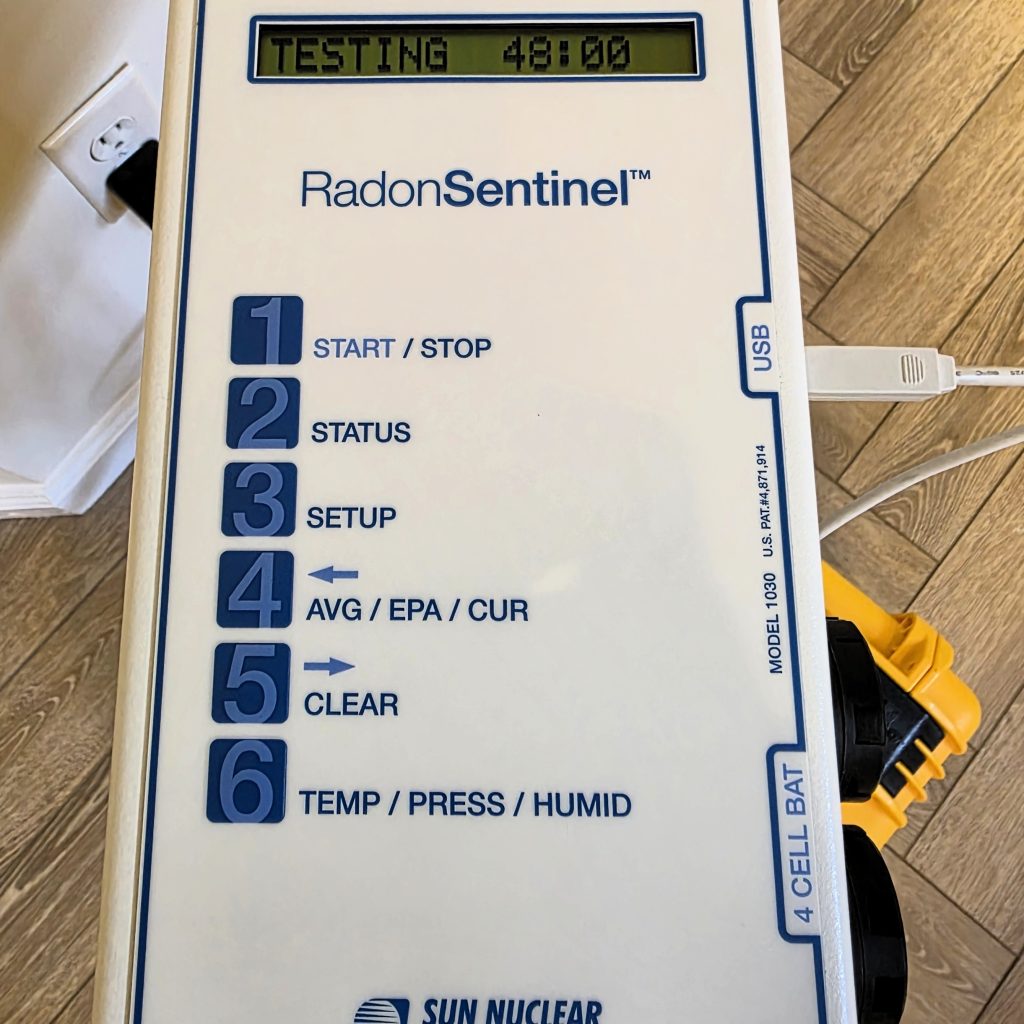
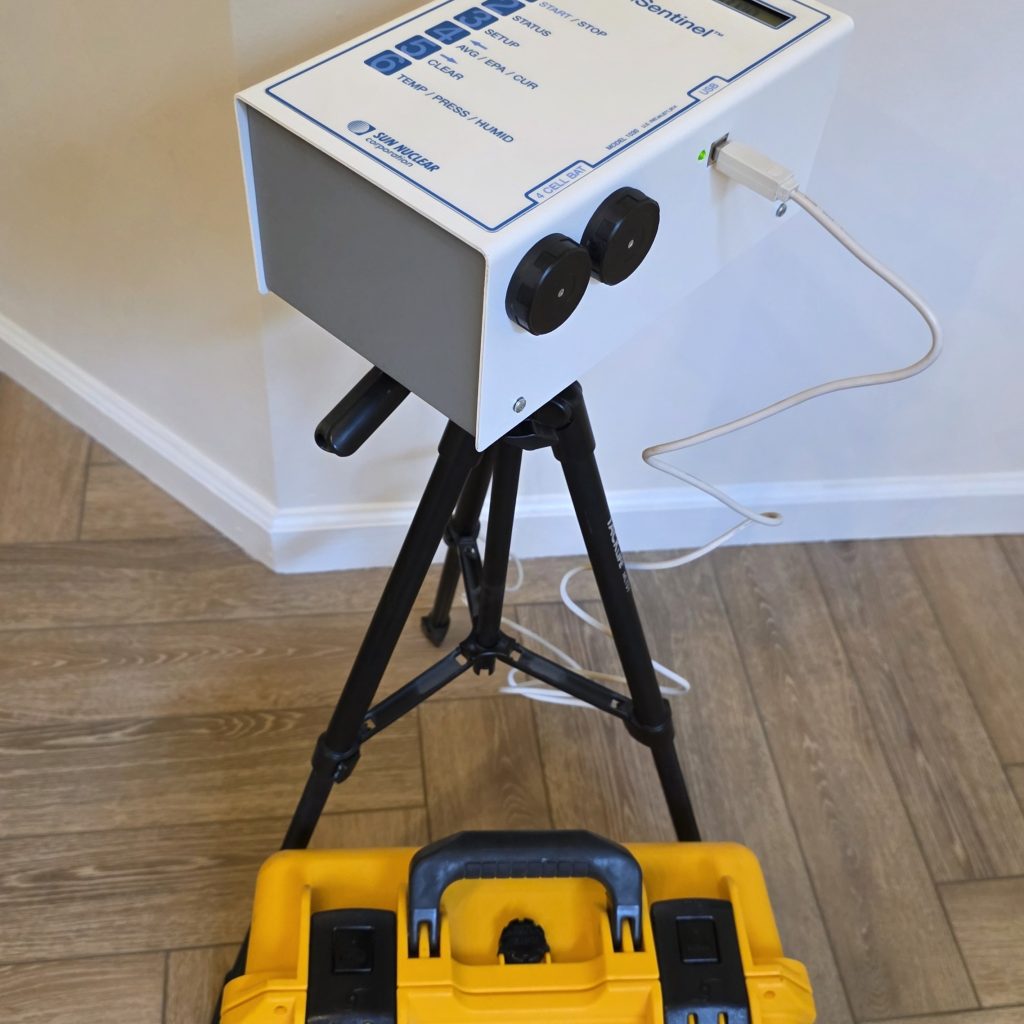
A real estate radon test should be both fast and defensible. I use continuous radon monitors that track conditions and help protect test integrity.
What the monitor captures during the test
- Hour-by-hour readings
- Tamper detection
- Temperature, humidity, and pressure tracking
- A clear report at the conclusion of the 48-hour test
Those details support reliable results for real estate decision-making.
What to expect when I set up the equipment
Where the monitor goes
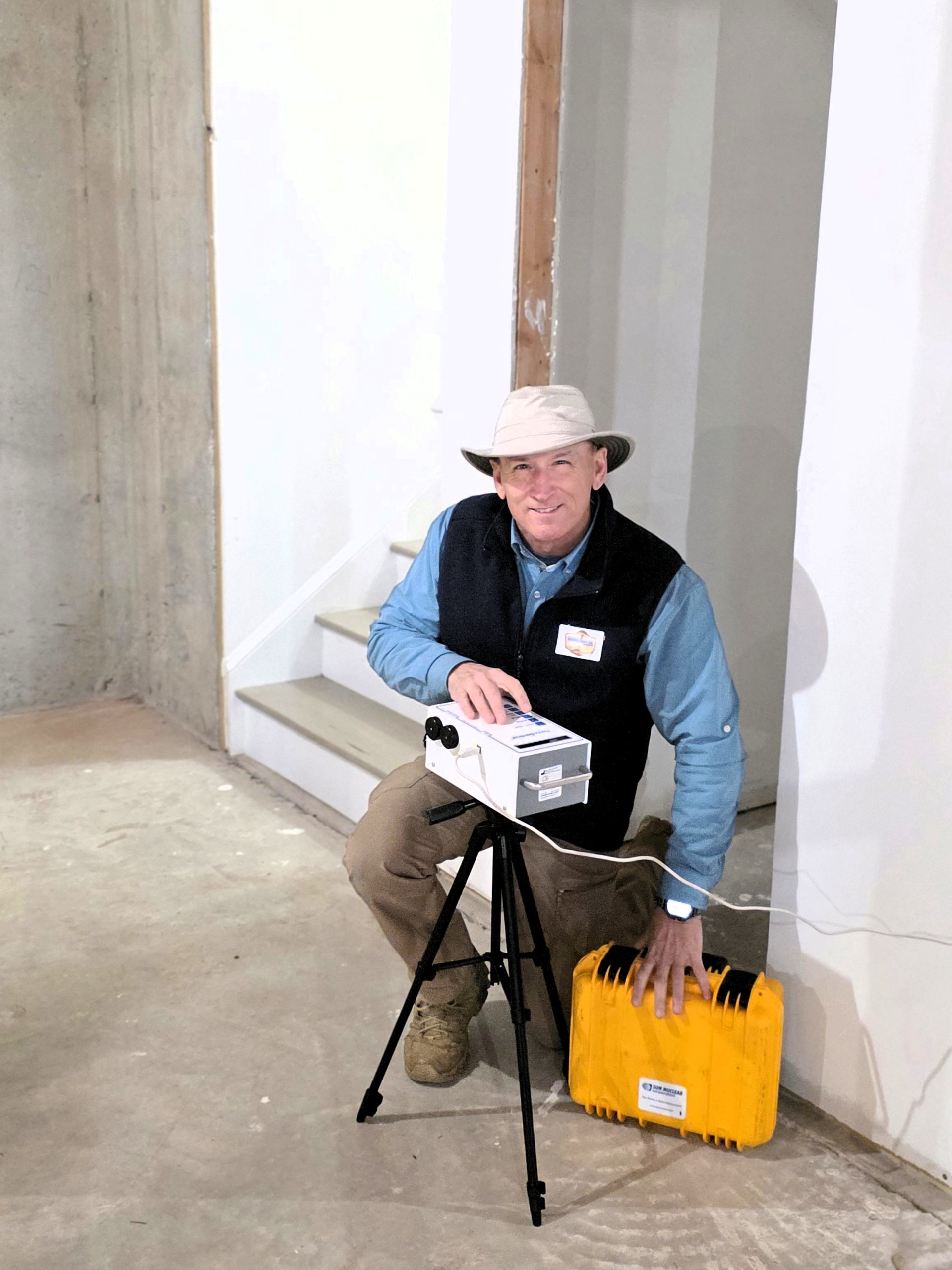
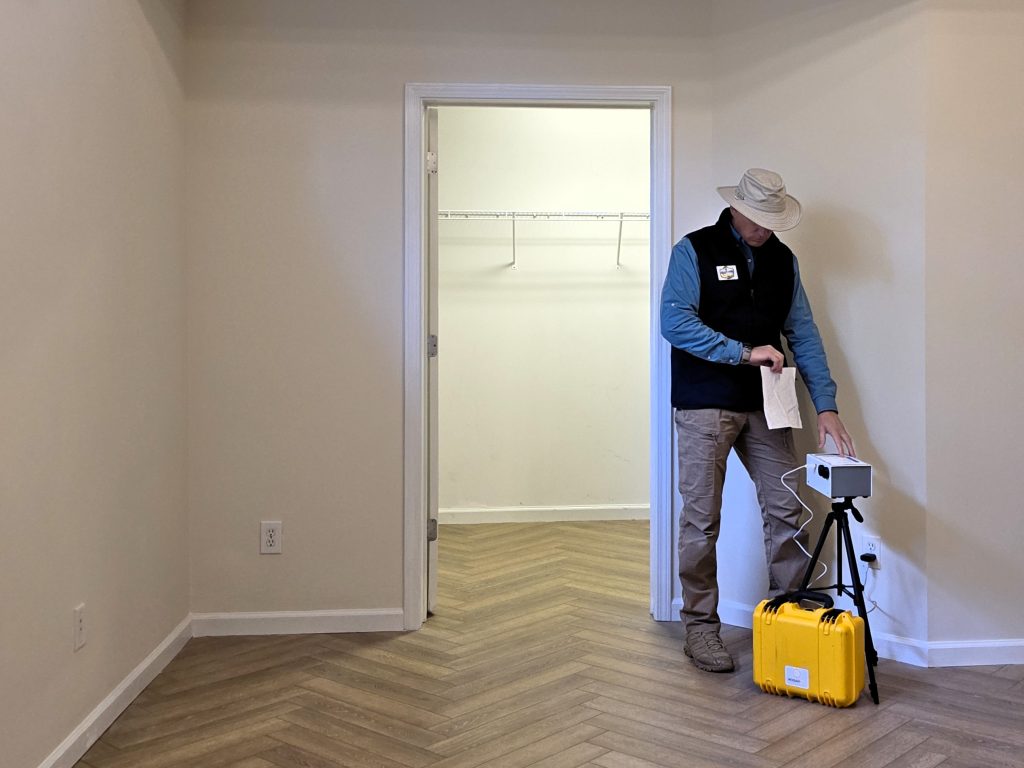
I place the monitor on the lowest level that could be used as a living space (not a mechanical-only area). In many homes, that’s a basement or finished lower level. For slab homes, placement often makes sense on the main level.
What you need to do (closed-house conditions)
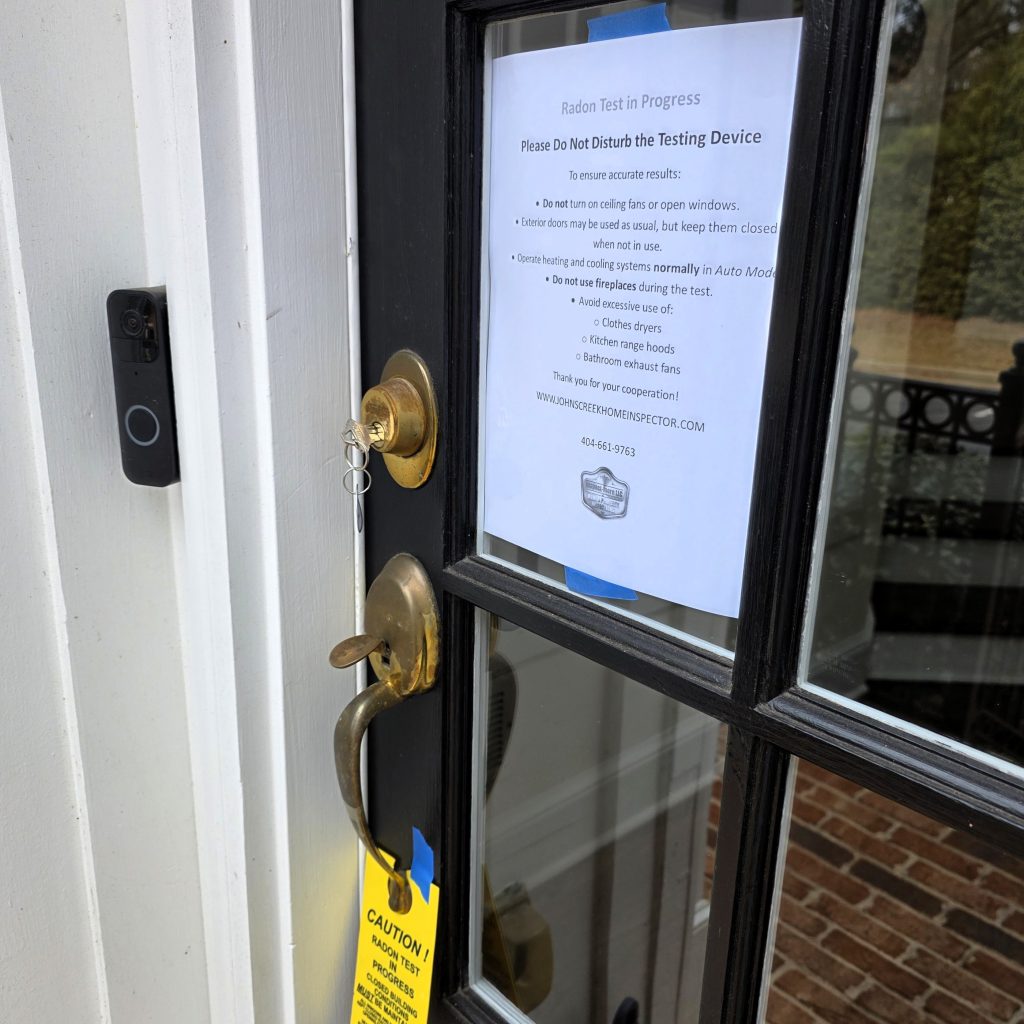
You don’t need to do much. During the 48-hour test:
- Keep windows closed
- Use exterior doors normally (avoid propping doors open during showings)
- Do not move, unplug, or disturb the monitor
Normal living is fine. The goal is to avoid unusual ventilation that could skew results.
What happens after 48 hours
Once the test ends:
- I retrieve the monitor
- I review the data
- You receive an easy-to-read report
- We can walk through the results and next steps
What you receive
- Test summary (average result)
- Test conditions log (tamper/condition tracking)
- Clear next-step guidance if elevated
Radon can fluctuate over time. Testing provides a reliable snapshot for transaction decisions.
What the numbers mean
We measure radon in pCi/L (picocuries per liter). Many buyers and agents use these practical guidelines:
- Below 2.0 pCi/L: generally considered low
- 2.0 to 3.9 pCi/L: often treated as a “consider mitigation” range
- 4.0 pCi/L and above: commonly treated as the level where mitigation is recommended
Radon can fluctuate over time. Testing provides a reliable snapshot for transaction decisions.
When radon testing is especially worth considering
Testing is strongly recommended when a home has:
- A basement (finished or unfinished) or a crawlspace
- Lower-level bedrooms, offices, or playrooms
- A tightly sealed, energy-efficient envelope (common in newer homes)
- Evidence of foundation cracks or multiple slab penetrations
If results are elevated: common real estate solutions
Elevated results are usually manageable. In many transactions, the solution is straightforward:
- Seller installs mitigation prior to closing (with verification testing)
- Seller provides a credit so the buyer can install after closing
- Parties agree to a mitigation plan and timeline based on contractor availability
After installation, I recommend a post-mitigation test to confirm performance.
Georgia Radon Resources (official)
- UGA Extension Radon Program (radon.uga.edu)
- Georgia Consumer Protection – Radon (consumer.georgia.gov/consumer-topics/radon)
FAQ (buyers and agents)
How long does a radon test take?
Most real estate radon tests run about 48 hours.
Can we live in the home during the test?
Yes. Live normally, keep windows closed, and use exterior doors normally. Leave the monitor alone.
Should we test a new construction home?
Yes. New homes can test elevated because soil gas and pressure dynamics drive radon, not home age.
What happens if radon is elevated?
Mitigation is usually manageable. Many transactions resolve it with seller-installed mitigation, a credit, or a negotiated plan. Post-mitigation testing confirms results.
Bottom line
Radon testing before closing is a smart step in North Metro Atlanta. It’s quick, non-invasive, and it provides information you can’t get any other way during a standard visual inspection.
Ready to add radon testing to your inspection?
- Learn more: Radon Testing Services
- Schedule online: Book Your Inspection
- Questions: Send a Message