How to Compare Home Inspection Reports Before You Hire an Inspector in Johns Creek
Most buyers compare home inspectors by price, availability, reviews, and scheduling convenience. Those things matter. But one of the best ways to compare inspectors is often overlooked: review the sample report before you hire.
The report is not just paperwork. It is the product you are actually buying. The inspection may last a few hours, but the report is what you, your agent, and sometimes the seller will rely on during the rest of the due diligence period.
That is why it helps to ask a simple question before choosing an inspector:
Will this report actually help me make better decisions during due diligence?
If you are buying a home in Johns Creek, Alpharetta, Suwanee, Cumming, Buford, Duluth, or another North Metro Atlanta community, the quality of the report can make a major difference in how clearly you understand the home.
Bottom line: Before choosing a home inspector, look at the report. A clear sample report can show you how the inspector communicates, documents findings, and helps buyers make decisions during due diligence.
Quick Takeaways
- A home inspection report should explain findings clearly, not just list defects.
- Photos should show the condition, location, and surrounding context.
- Strong reports help clients separate safety concerns, functional defects, maintenance items, and routine age-related conditions.
- Short-term warranties or guarantees may be a bonus, but they are not a substitute for a thorough inspection and a clear report.
- Before hiring an inspector, review a sample report and ask whether it would help you make decisions during due diligence.
Not All Home Inspection Reports Are Equally Helpful
At a glance, many home inspection reports can look similar. Most include photos, colored summaries, and sections for roofing, exterior, plumbing, electrical, HVAC, interiors, insulation, ventilation, and structure.
Once you start reading, the differences become much clearer.
Some reports feel more like checklists. They may identify conditions with short, generic comments but provide little context. Others do a better job of explaining what was found, why it matters, and what the next step should be.
Better reporting does more than list defects. It helps buyers understand the home, separate more significant concerns from routine items, and move forward with greater clarity.
Four Common Report Styles Buyers May Encounter
There are many good inspectors, and report styles can vary widely. The goal is not to say that one format is automatically good or bad. Instead, the goal is to help buyers understand what they are looking at when they compare sample reports.
1. Portal-Style Standardized Reports
Some reports are built around clean digital platforms with organized sections, ratings, summaries, and repair request tools. These reports can be easy to navigate and visually polished.
The question is whether the actual comments provide enough useful explanation. A report can look modern and still feel light on context if the narratives are too brief or generic.
2. Visual, Concise Digital Reports
Other reports focus heavily on photos, short summaries, mobile-friendly formatting, and convenience tools for agents and buyers. These can be helpful during a busy transaction, especially when everyone is trying to review information quickly.
Concise reporting can be a strength when it is done well. Even a short report should explain the significance of important findings, so buyers do not have to guess why something matters.
3. Warranty-Heavy Inspection Packages
Some inspection companies market their services with short-term guarantees, warranties, or bundled protection plans. These extras can sound appealing, especially to first-time buyers.
In some cases, a limited warranty may offer a small added layer of comfort. Buyers should still read the actual terms carefully. Coverage may be narrower than expected, time periods may be short, and exclusions can be significant.
A warranty should not distract from the more important question: did the inspection and report help you understand the home?
4. Narrative, Construction-Informed Reports
Strong reports usually combine good organization with clear explanations, useful photos, and practical recommendations. These reports help buyers understand not just what was observed, but what it may mean in the real world.
That does not mean the report should be dramatic or overloaded with technical language. In fact, the best reports often do the opposite. They explain concerns calmly, clearly, and in a way that helps the buyer take the next step.
What to Look For in a Sample Home Inspection Report
Before hiring a home inspector, ask to see a sample report. Then look beyond the page count, number of photos, or how polished the software looks. Pay attention to how well the report communicates.
1. Clear Explanations, Not Just Labels
Good reporting should do more than say that something is damaged, missing, loose, outdated, or defective. It should explain the condition, why it matters, and what the realistic next step may be.
There is a big difference between a comment that simply identifies a concern and one that helps the buyer understand it.
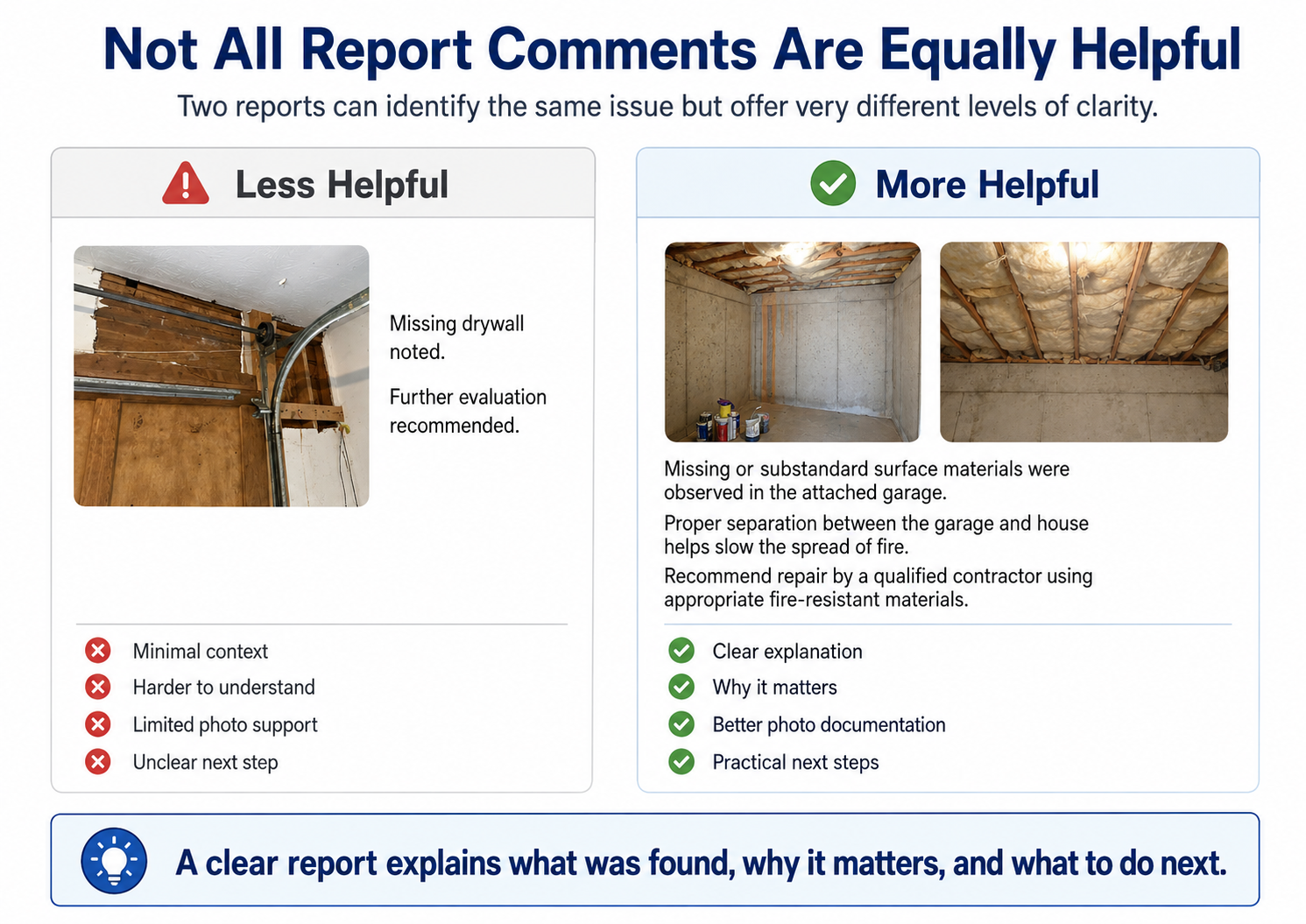
For example, a vague comment might say:
Damaged flashing observed. Repair as needed.
A more helpful comment would say:
Damaged or improperly installed roof flashing was observed at a roof penetration. This condition can allow water intrusion into concealed areas over time. Recommend repair by a qualified roofing contractor to help prevent leakage and related damage.
Both comments identify a problem. Only one gives the client meaningful context.
2. Photos That Add Clarity
Photos should help the buyer understand the issue, not just prove that the inspector was there.
Useful report photos should clearly show:
- the condition itself
- the location of the concern
- enough surrounding context to understand where it is
- arrows, circles, or labels when needed
This is especially helpful for out-of-town buyers, busy agents, and anyone reviewing the report after the inspection is over.
3. Prioritization of Findings
Most homes have a mix of conditions. A few may involve safety concerns. Others are functional defects, maintenance items, or minor age-related conditions that are common for the home.
A strong report helps the client understand what matters most. Without that context, a long report can feel overwhelming even when many of the findings are routine.
Clarity is the goal. Buyers need to understand which items deserve immediate attention, which items may call for specialist evaluation, and which items are more typical maintenance concerns.
4. Plain-Language Communication
A professional report can still be easy to read.
Technical accuracy matters, but the overall document should still make sense to a typical buyer. If the report is packed with vague phrases, unexplained technical language, or canned comments that do not seem specific to the house, it may not be doing enough to help the client.
A good report should feel specific, organized, and useful. It should not feel like a puzzle.
5. Practical Next Steps
Generic recommendations do not always help much during negotiations, repair planning, or further evaluation.
A more useful report gives realistic direction. That does not mean the inspector is designing repairs or stepping beyond the scope of the inspection. Instead, the client leaves with a better sense of whether the item calls for routine maintenance, repair, monitoring, or evaluation by a qualified specialist.
A Helpful Report Should Reduce Confusion, Not Create More of It
The inspection period is usually short. Buyers are making important decisions with real money on the line. In that setting, unclear reporting can create unnecessary stress.
A vague report can make minor items seem more serious than they are. It can also cause buyers to overlook more important defects because the report does not explain the concern clearly enough.
Clear reporting helps everyone involved:
- buyers better understand the home
- agents communicate more effectively
- repair requests become more focused
- specialist evaluations are easier to prioritize
- next steps are easier to plan
For agents, report clarity matters too. A well-written report can make it easier to discuss findings with clients, organize repair requests, and avoid confusion over routine maintenance items versus more significant concerns.
Where Warranties Fit In
Some home inspectors advertise short-term guarantees or bundled warranties as part of the inspection package. These can sound reassuring, and in some cases they may provide a small added benefit.
Buyers should be careful not to confuse a warranty offer with report quality. The inspection report is still the main tool you will use during due diligence.
Before relying on any warranty or guarantee, read the actual terms. Look at what is covered, what is excluded, how long the coverage lasts, what documentation is required, and whether the warranty addresses the kinds of concerns that matter most to you.
A limited warranty may be a bonus. It should not be the main reason you choose an inspector.
Professional Credentials and Report Accountability
Professional credentials can also matter when comparing inspectors. As an ASHI Certified Inspector, my inspection reports have been independently reviewed for compliance with ASHI Standards of Practice. Buyers can also use ASHI’s Find an Inspector tool to verify ASHI member inspectors.
Credentials do not replace your own review of a sample report, but they can provide another layer of professional accountability when you are deciding who to hire.
Questions to Ask Before Hiring a Home Inspector
When comparing home inspectors in Johns Creek or North Metro Atlanta, consider asking these questions:
- Can I review a sample report before scheduling?
- Does the report explain why findings matter?
- Are photos used to clarify locations and concerns?
- Does the report separate significant concerns from routine maintenance?
- Are the recommendations clear enough to help with the next steps?
- Will the inspector be available to answer questions after the report is delivered?
These questions can tell you a lot about the inspection experience before you ever schedule an appointment.
What I Aim to Provide
My goal is to provide reports that are clear, photo-rich, construction-informed, and useful in the real world.
That means focusing on:
- practical explanations
- organized findings
- helpful photo documentation
- calm, non-alarmist language
- realistic recommendations for next steps
- reporting that helps buyers and agents communicate clearly during due diligence
A home inspection report should not feel like a panic button. It should help you understand the home and move forward with more confidence.
Tip for buyers and agents: A sample report is one of the easiest ways to compare inspectors before scheduling. Look for clear photos, plain-language explanations, and recommendations that help you understand the next step.
See a Real Example
If you are comparing inspectors, start by reviewing sample reports. A sample report can show you how the inspector communicates, how findings are organized, and whether the report would be useful to you during the buying process.
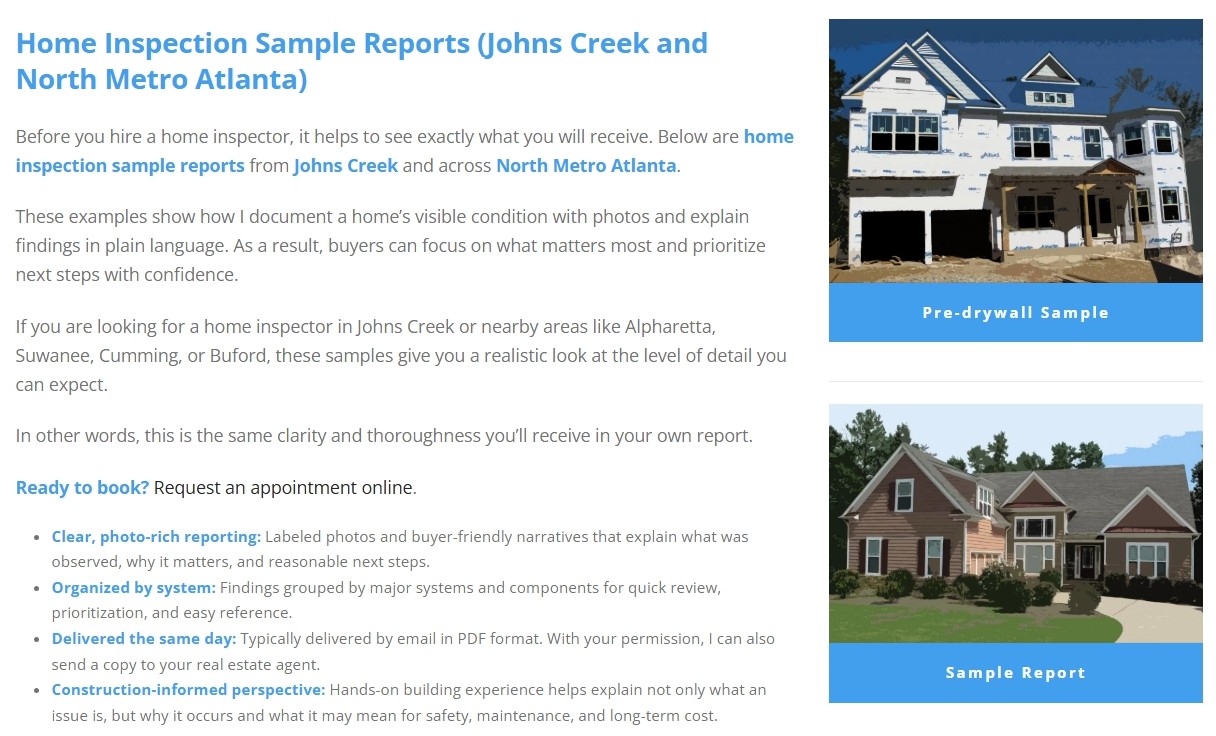
You can review my sample home inspection reports to see how I document findings and explain concerns.
You can also learn more about what is included in my home inspection services page.
If you are buying in Johns Creek, Alpharetta, Suwanee, Cumming, Buford, Duluth, or another nearby North Metro Atlanta community, choosing an inspector with a clear and useful reporting style can make the due diligence process much easier.
Ready to schedule? Request an inspection online.