
“Would You Buy This House?” What I Tell My Home Inspection Clients
“Joe, would you buy this house?”
It is one of the questions I hear most often from homebuyers. Sometimes it comes with a more personal follow-up:
“If I were your daughter, would you tell me to buy it?”
I understand why people ask. Buying a home is expensive, emotional, and often stressful. By the time we meet at the inspection, the buyer may already be picturing furniture in the rooms, children playing in the yard, or family gathering in the kitchen.
Then we begin discussing the roof, the crawlspace, the electrical system, aging equipment, or repairs the buyer had not anticipated.
Behind “Would you buy this house?” is often another question:
“Am I getting into something I do not fully understand?”
That question deserves a thoughtful answer. My job is not to make the buying decision for you. My job is to help you understand the home well enough to make that decision with clearer expectations.
Quick Takeaways
- A home inspection is not a pass-or-fail test.
- The seriousness of the findings matters more than the number of items in the report.
- A condition that is repairable may still be expensive, disruptive, or unacceptable to a particular buyer.
- Unanswered questions can matter as much as confirmed defects.
- A good inspector should explain what was observed, why it matters, and what the next step should be.
What Helps More Than a Yes-or-No Answer
A simple answer based on whether I would buy the house would leave out some of the most important considerations.
My background in construction affects how I look at repairs. As a third-generation contractor, I may be comfortable taking on work that another buyer would find overwhelming. Someone planning a major renovation may view an aging kitchen, older electrical system, or worn exterior differently from a buyer who needs a move-in-ready home.
Neither buyer is wrong. They simply have different plans, budgets, experience, and tolerance for repair work.
A property that works for an experienced renovator may be a poor fit for a first-time buyer with limited funds after closing. A home that feels too demanding to one family may be exactly what another buyer has been looking for.
Even when I know something about your plans, my personal willingness to own the home is not a reliable measure of whether it is right for you.
The ASHI Standard of Practice explains that determining the advisability of purchasing a property is not a required part of a home inspection. The inspection is intended to provide information about the condition of the systems and components inspected at that time.
That does not mean I should avoid giving you meaningful guidance. You are hiring me for my observations, experience, and professional judgment. You should expect a clear explanation of the findings and their significance.
What I Can Tell You Clearly
While I will not choose the house for you, I can help you understand:
- Safety concerns that deserve prompt attention.
- Significant defects affecting the structure or major systems.
- Water-management concerns that may lead to moisture damage or deterioration.
- Aging components that may need replacement planning even if they are still operating.
- Maintenance items that should be corrected before they develop into larger problems.
- Conditions needing further evaluation because the cause, extent, or repair scope could not be established during the inspection.
- Areas or systems that could not be fully inspected because access, utilities, stored belongings, or other conditions limited the inspection.
I can also tell you which findings concern me most and why.
If something appears unsafe, I will say so. When I see evidence of a structural concern, I will explain what I observed and recommend further evaluation when appropriate. A condition common for the age of the home may deserve context, but that does not mean it should be ignored.
Calm communication should not mean vague communication. You should not finish the inspection wondering whether an item is routine maintenance or a concern that needs additional answers before your due-diligence period ends.
A Long Report Does Not Automatically Mean a Bad House
Every home has issues. That includes older homes, recently renovated homes, and new construction.
The number of report items does not tell the whole story. A report containing numerous smaller maintenance concerns may present a very different ownership commitment from a shorter report containing one significant and unresolved condition.
A loose cabinet handle, deteriorated exterior sealant, an aging air-conditioning system, and evidence of movement in the floor structure should not receive equal weight simply because each appears as an item in the report.
More useful questions include:
- How serious is the condition?
- Does it affect safety, structure, moisture control, or the operation of a major system?
- How soon should it be addressed?
- Is the likely repair reasonably understood?
- What remains unknown?
This is also why phrases such as “typical for the age” need context. A condition can be common in older homes and still represent a worthwhile safety improvement, a substantial future expense, or an active defect needing correction.
Age may help explain a condition. It does not make the condition harmless.
Known Repairs and Unanswered Questions Are Different
Buyers are often more comfortable once a concern has a reasonably defined scope.
For example, a worn roof may require evaluation and a replacement estimate. That may be a substantial expense, but an estimate can help the buyer understand the likely cost and timing.
Another condition may be less clearly defined. Moisture staining, soft materials, sloping floors, or limited access to a crawlspace may indicate a concern without revealing its cause or full extent during a visual inspection.
In that situation, the uncertainty itself matters. Further evaluation, improved access, or repair estimates may be needed before the buyer can understand what taking ownership could involve.
The fact that a condition can be repaired does not automatically make its cost, disruption, or remaining uncertainty acceptable to every buyer.
When You Ask, “What If I Were Your Daughter?”
I take that question as an expression of trust. The buyer wants to know that I am being direct and paying attention to the things that matter.
If my daughter were buying the house, I would want her to understand the same things I want every client to understand:
- Which concerns need prompt attention?
- Which repairs may be substantial?
- What important areas could not be fully inspected?
- What questions remain unanswered?
- What additional information should be obtained before making the decision?
I would not want her relying on a general assurance that the house is “fine.” I would want her to understand the findings, obtain additional information where needed, and decide whether the home fits her finances, plans, and comfort with repairs.
That is the same standard I try to provide for every client.
Sometimes the Right Next Step Is More Information
A home inspection is visual and non-invasive. It can identify visible evidence of a concern without determining every concealed condition, the exact cause, or the full repair cost.
A home inspector is somewhat like a general practitioner for the house. We evaluate many different systems, understand how they work together, and recognize when a condition deserves closer attention. But when the cause, extent, or appropriate repair cannot be responsibly determined through a general visual inspection, it is time to involve someone with specialized expertise in that field.
That is not passing the concern along or avoiding an answer. It is recognizing when the most useful answer must come from a roofer, electrician, plumber, HVAC contractor, structural engineer, or another appropriately qualified specialist who can perform focused testing, calculations, disassembly, or repair planning that is outside the scope of a home inspection.
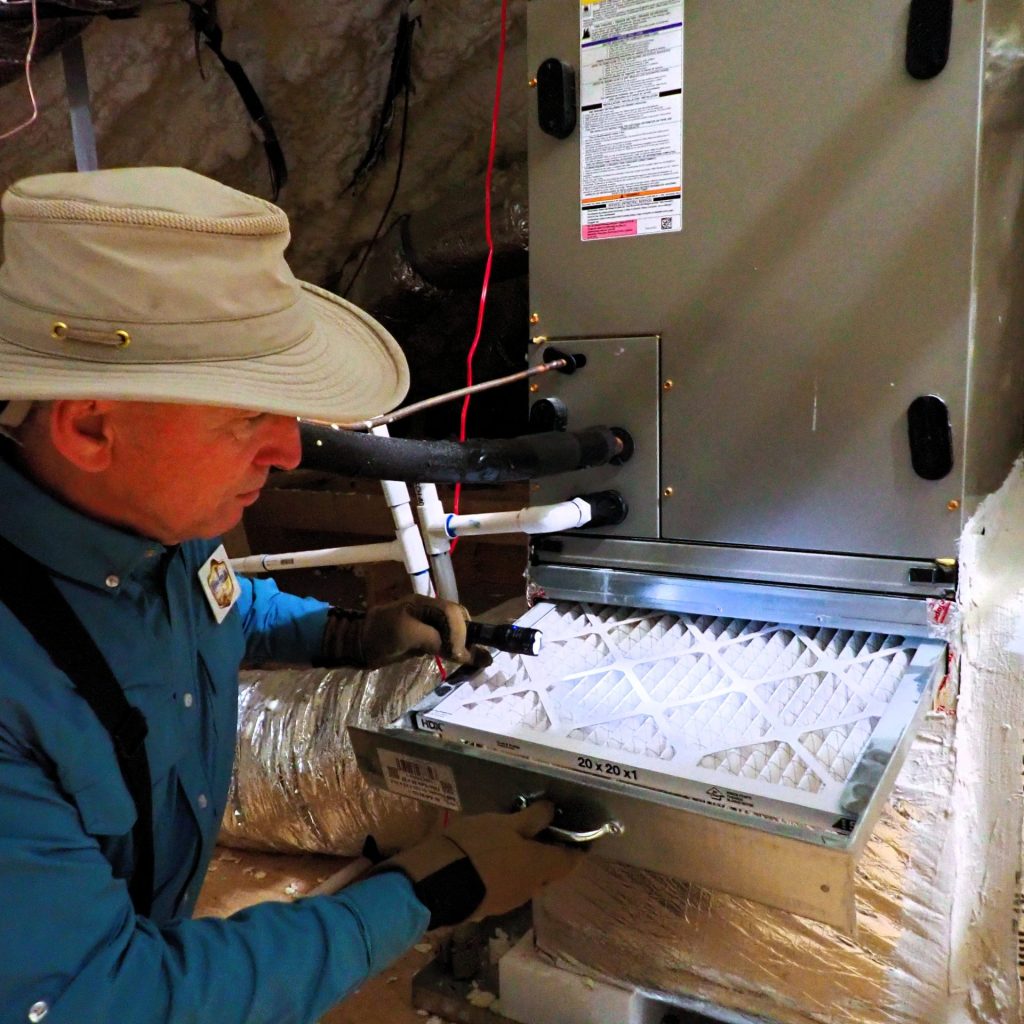
When additional information is needed, the next step may include:
- Having a qualified contractor assess a specific system or component.
- Obtaining an evaluation from a structural engineer when appropriate.
- Requesting access to an area that was inaccessible during the inspection.
- Reviewing available permits, service records, repair documentation, or association records.
- Obtaining written repair or replacement estimates.
The relevant report section, including its photographs and recommendation, can usually be forwarded directly to the appropriate contractor or engineer. This gives the specialist a clear starting point by showing what was visible during the inspection, why it was reported, and what question still needs to be answered. The specialist will still need to perform an independent evaluation before defining the repair, scope of work, or cost.
These steps should generally be completed within the applicable inspection or due-diligence period. Your real estate agent can help you understand the contract deadlines and available options.
Further evaluation is not simply language added to make a report longer. It means the available information was not sufficient to responsibly define the condition or its implications.
Better Questions to Ask Your Home Inspector
You are always welcome to ask what concerns me. These questions often lead to a more useful conversation than “Would you buy it?”
- Which findings deserve the most attention, and why?
- Is anything unsafe or in need of prompt correction?
- Which repairs may involve substantial expense or disruption?
- What appears to be routine maintenance?
- Which items need further evaluation before I make my decision?
- Were there important areas or systems you could not fully inspect?
- Which repairs should I obtain estimates for now?
The answers help turn a long report into a more understandable picture of the home.
Frequently Asked Questions
Does a home inspection pass or fail a house?
No. A home inspection describes visible and accessible conditions at the time of the inspection. The same findings may be acceptable to one buyer and unacceptable to another, depending on the seriousness of the concerns and the buyer’s circumstances.
Can a home inspector tell me which findings are most important?
Yes. Your inspector should be able to explain which findings involve safety, significant defects, aging systems, maintenance, or the need for further evaluation. That context is one of the most valuable parts of the inspection.
Does “repairable” mean I should still buy the house?
Not necessarily. Most building defects can be corrected in some manner, but the cost, disruption, timing, and remaining uncertainty may not fit your plans or budget.
Should I obtain repair estimates before closing?
Estimates can be especially useful for significant repairs, aging systems, or conditions whose scope is uncertain. They can help you make decisions using more than a general assumption about cost.
Is a common condition in an older home still a concern?
It can be. Common conditions may reflect older construction standards, normal aging, deferred maintenance, or an active defect. The important part is understanding which one applies and whether repair or improvement is recommended.
Final Thoughts: My Responsibility Is to Help You Understand
Buying a home involves more than its physical condition. Your finances, priorities, location needs, future plans, and comfort with repairs all matter.
My responsibility is to give you clear information about the conditions I observe, explain their significance, and identify where more information is needed. A visual inspection cannot uncover every concealed defect or predict every future failure, and explaining those limitations is part of giving you an honest picture of the property.
You do not need to become an expert in houses before making a thoughtful decision. You do need to understand the concerns well enough to decide what you are comfortable taking on.
That is the conversation I want to have when you ask:
“Would you buy this house?”
Buying a Home in Johns Creek or North Metro Atlanta?
Inspect-More LLC provides detailed, construction-informed home inspections for buyers in Johns Creek, Alpharetta, Suwanee, Cumming, Buford, Milton, and surrounding North Metro Atlanta communities.
View our sample reports to see how inspection findings are documented and explained, or schedule an inspection when you are ready.
Joe Moore is an ASHI Certified Inspector and third-generation contractor who has inspected thousands of homes throughout North Metro Atlanta.